Order Fulfillment Software for Ecommerce: A Buyer Guide for Operations Teams
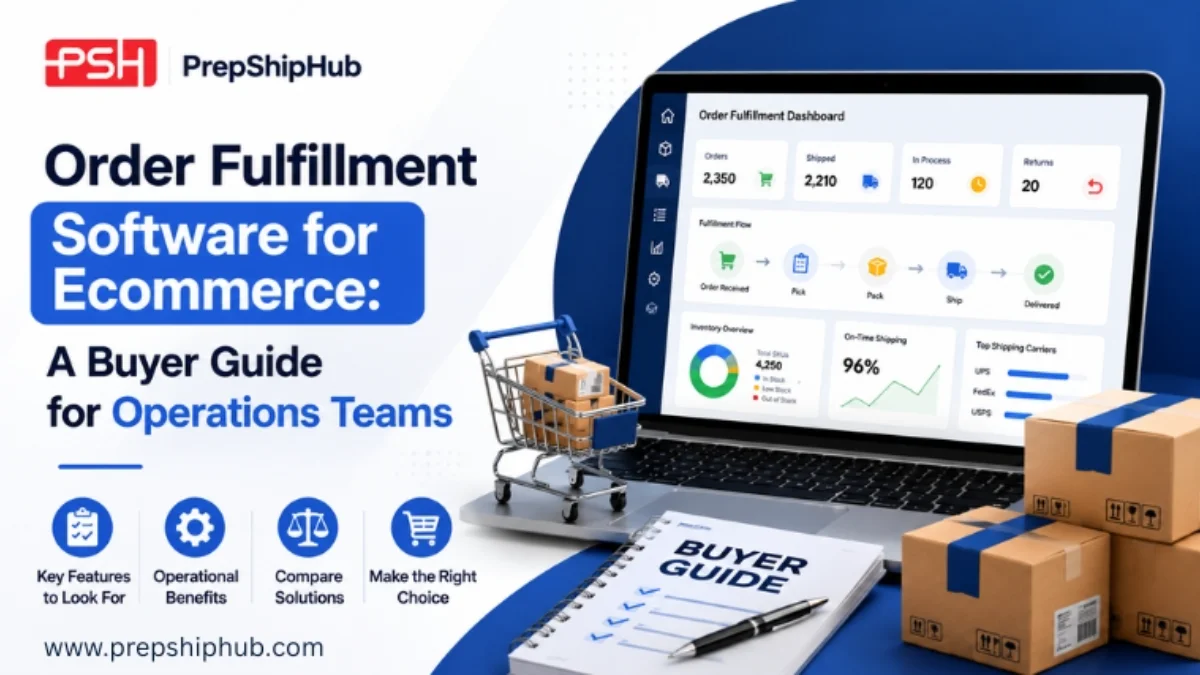
Order Fulfillment Software for Ecommerce Buyer's Guide.jpg
Choosing order fulfillment software for ecommerce is not just a procurement decision. For an operations manager, it means mapping how orders actually move through your warehouse today, checking whether a new system will talk to your existing tools, and getting a floor team to adopt a new process without disrupting shipping deadlines.
Business owners often evaluate order fulfillment software for ecommerce on features and price. Operations teams have to answer a harder question: will this system fit the workflow you actually run, and can your team be using it well within a few weeks. This guide walks through that evaluation from an operations point of view.
What operations teams need from order fulfillment software for ecommerce
Most vendor demos focus on dashboards and reporting. Operations teams need to look past that to the details that determine whether a system works on a busy shipping day: how it handles partial shipments, how it flags exceptions, and how quickly a picker can find what they need without extra training.
The right system should reduce the number of manual steps between an order coming in and a label printing, not just make those steps look nicer on a screen. For teams evaluating warehouse management software for ecommerce alongside a fulfillment platform, the same standard applies: fewer clicks, fewer re-keyed fields, and fewer places for an order to stall.
Mapping your fulfillment workflow before you evaluate software
Workflow mapping matters whether you are evaluating a dedicated fulfillment platform or warehouse management software for ecommerce operations more broadly. Either way, the software needs to fit a process you already understand in detail.
Documenting your current pick, pack, and ship process
Before comparing vendors, write down every step your team currently takes from order receipt to shipment, including the manual workarounds nobody put in a process document. This ecommerce fulfillment workflow software evaluation only works if you know what you are actually replacing.
Identifying bottlenecks and manual handoffs
Look for the points where one person has to check something in a spreadsheet, re-key data into a second system, or wait on approval before moving an order forward. These handoffs are usually where a new system either saves the most time or introduces new friction if it is not configured correctly. Mapping them first makes any ecommerce fulfillment workflow software evaluation far more useful, since you will know exactly which features to test on a vendor call.
Integration requirements to check before you commit
Integration gaps are the most common reason order fulfillment software for ecommerce ends up creating extra manual work instead of removing it. The three areas below cover most of what causes problems after go-live.
Marketplace and storefront integrations
Confirm the software connects directly to every marketplace and storefront you sell on, not just the major ones. A system that requires manual CSV uploads for one channel will quietly become the exception your team dreads handling every week.
Carrier and shipping integrations
Check which carriers the software integrates with directly, and whether it supports the label formats and EDI documents your retail partners require. Fulfillment software integration requirements around EDI, such as order, invoice, and shipping notice documents, are often set by GS1 standards that major retailers require partners to follow.
ERP and accounting system integrations
If your fulfillment software does not sync directly with your ERP or accounting system, someone on your team will end up reconciling orders and invoices by hand. Ask vendors exactly which ERP platforms they support natively versus through a third-party connector.
Onboarding your team to new order fulfillment software for ecommerce
Training warehouse staff on new workflows
Warehouse staff learn a new system fastest when training happens on real orders, not a demo environment. Fulfillment software for operations teams should include a training mode or sandbox that mirrors your actual product catalog and order types.
Running a parallel pilot before full cutover
Run the new system alongside your current process for a defined pilot period before cutting over completely. This gives your team a chance to catch configuration issues while the old process is still available as a backup.
According to Gartner, 76% of logistics technology transformations fail to meet their critical success metrics, and even projects considered successful can lose about 20% of their expected value after launch. Skipping workflow mapping and vendor evaluation, rather than picking a fundamentally wrong system, is often what separates the two outcomes. Source: Gartner
Vendor evaluation questions to ask
An operations team evaluating three vendors for order fulfillment software for ecommerce at a 50-order-a-day warehouse found that two of the systems required manual CSV exports for one of their sales channels, a detail that never came up until the team asked directly. A thorough fulfillment software vendor evaluation covers more than price and features, and bringing a written list of questions to every vendor call surfaces these gaps before they become a live problem after go-live.
What to ask | Why it matters |
|---|---|
Which marketplaces, carriers, and ERPs connect natively? | Manual workarounds usually start here |
How are short-shipped or mismatched orders flagged? | Determines how fast your team catches errors |
Is there a sandbox for staff training? | Speeds up onboarding without risking live orders |
Can we run a pilot before a full contract? | Limits risk if the system does not fit your workflow |
What is support response time during a live shipping day? | Matters most during peak volume |
How PrepShipHub supports operations teams
PrepShipHub is order fulfillment software for ecommerce built with operations teams in mind: real-time inventory sync, direct marketplace and carrier integrations, and a dashboard your warehouse staff can learn quickly without a lengthy training cycle. It gives ops leads the same visibility into exceptions and order status that they would otherwise have to piece together from separate systems.
Conclusion
Order fulfillment software for ecommerce works well for operations teams when the evaluation starts with your actual workflow, not a vendor's feature list. Mapping your process, checking integration requirements, and asking pointed vendor questions before you commit reduces the chance of a rollout that looks good in a demo but breaks down on a busy shipping day.
Reviewed by the PrepShipHub operations team, drawing on direct experience onboarding warehouse teams onto new fulfillment systems.
If you are evaluating fulfillment software for operations teams, explore PrepShipHub.
Frequently asked questions
What integration requirements should operations teams check before choosing fulfillment software?
Confirm that the order fulfillment software for ecommerce you are evaluating connects directly to your sales channels, shipping carriers, and ERP or accounting system. Fulfillment software integration requirements that rely on manual CSV uploads or third-party connectors for major systems usually create ongoing manual work for your team.
How long does it take to onboard a team to new order fulfillment software for ecommerce?
It varies with warehouse size and process complexity, but running a parallel pilot before full cutover typically takes a few weeks. Training staff on real orders in a sandbox environment, rather than a generic demo, usually speeds up adoption.
What questions should operations teams ask fulfillment software vendors?
Ask about native integrations, how the system flags exceptions like short shipments, whether a sandbox is available for training, and what support looks like during peak shipping days. A structured fulfillment software vendor evaluation surfaces these details before they become problems after go-live.
Related articles
5 Features Every 3PL Inventory Management Software Needs for Multi-Client Warehouses
This article walks through five capabilities that matter most once a warehouse is managing inventory for multiple clients at once, drawn from the evaluation criteria operators actually use rather than a generic feature list.
 ·Oct 16, 2026·8 min
PrepShipHub vs. Hopstack: Fulfillment Software Comparison for Prep Centers and 3PLs
Both platforms genuinely support FBA prep workflows, so the real decision is not which one covers the basics. It is whether an operation needs industrial-scale warehouse automation, or a platform purpose-built around prep center client management and billing.
·Oct 14, 2026·6 minPrepShipHub vs. PrepBusiness: Head-to-Head for Amazon Prep Centers
The real question is not which tool handles Amazon FBA prep best today. It is whether a prep center plans to stay Amazon-only, or expects to add Walmart, Shopify, or other channels within the next year or two.
·Oct 9, 2026·6 min